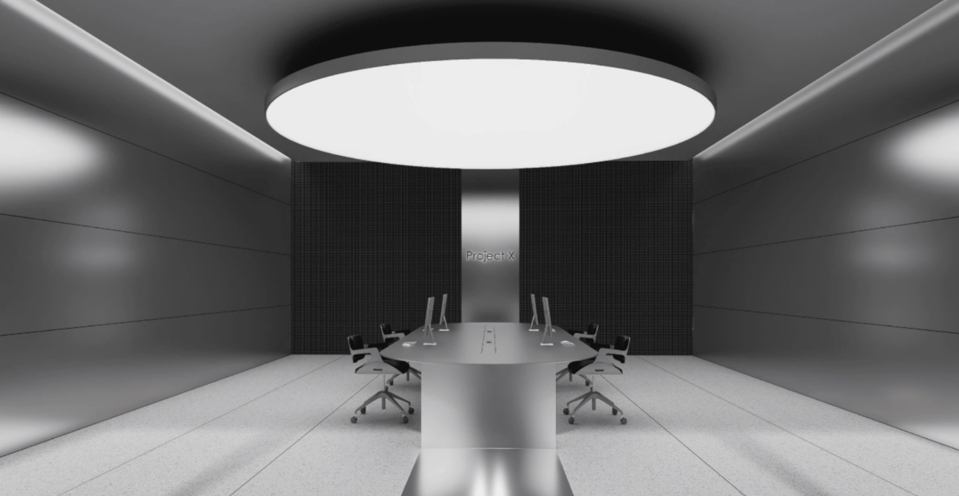
The workplace has undergone a remarkable transformation over the past few years. No longer viewed as simply a place to complete daily tasks, today’s office is a destination that fosters collaboration, innovation, wellbeing, and brand culture. As businesses across Dubai compete for top talent and adapt to hybrid working models, investing in innovative workspace design ideas has become a strategic advantage rather than a design trend.
Modern offices are expected to inspire creativity, enhance productivity, and provide employees with environments that support different ways of working. The most successful organisations recognise that exceptional workplace design directly influences employee satisfaction, client perception, and overall business performance.
Dubai has positioned itself as a global business hub, attracting multinational corporations, start-ups, creative agencies, and technology companies from around the world. As competition for skilled professionals continues to grow, workplace experience has become an important differentiator.
Employees increasingly value workplaces that prioritise flexibility, comfort, wellness, and collaboration. A thoughtfully designed office helps businesses strengthen company culture, improve employee engagement, and create an environment where innovation can thrive.
Professional office interior design goes beyond selecting furniture and finishes. It aligns workspace planning with business goals, ensuring every square metre supports productivity while reflecting the organisation’s identity.
Forward-thinking businesses understand that workplace design is no longer an operational expense—it is an investment in people and long-term growth.
One of the most influential workplace trends is biophilic design, which integrates natural elements into interior environments to improve wellbeing and cognitive performance.
Research consistently shows that access to nature reduces stress, enhances focus, and increases employee satisfaction. In Dubai’s urban landscape, incorporating natural elements into office interiors creates a welcome sense of balance.
Popular biophilic features include:
When combined with thoughtful creative office interior design solutions, these elements create healthier, more inspiring workplaces that employees genuinely enjoy spending time in.
The traditional office layout of assigned desks and enclosed offices is rapidly evolving. Today’s businesses require flexible environments that accommodate a variety of work styles and activities.
Activity-based working provides employees with different spaces for different tasks, including:
Rather than forcing everyone into the same environment, these layouts empower employees to choose spaces that best support their work. Successful commercial interior design solutions create seamless transitions between collaboration and concentration, improving efficiency while encouraging innovation across teams.
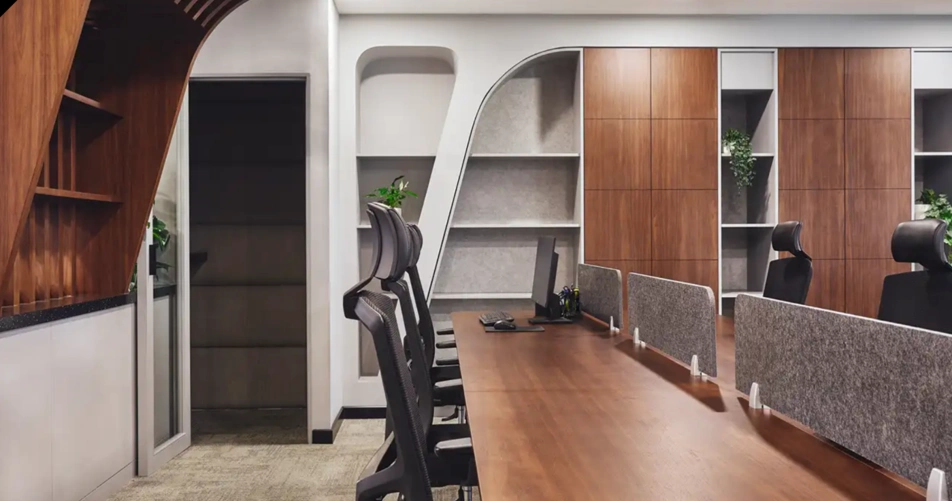
Employee wellbeing has become central to workplace design. Small environmental improvements can have a significant impact on comfort, productivity, and overall job satisfaction.
Natural light remains one of the most valuable workplace features, helping regulate energy levels, improve mood, and reduce eye strain. Layered lighting strategies ensure workspaces remain comfortable throughout the day.
Equally important is acoustic planning. Open offices can become distracting without proper sound management, making acoustic panels, ceiling treatments, carpets, and quiet zones essential components of effective office interior design.
Additional wellness-focused features include:
These investments contribute to healthier employees and stronger organisational performance over the long term.
An office should communicate far more than professionalism—it should tell the story of the company itself.
Every design decision, from the reception experience to meeting rooms and collaborative spaces, should reinforce the organisation’s values, culture, and personality.
Brand expression can be achieved through:
Thoughtful creative office interior design solutions ensure employees feel connected to the organisation while leaving a memorable impression on visitors and clients. The strongest workplace brands create environments where culture is experienced rather than simply communicated.
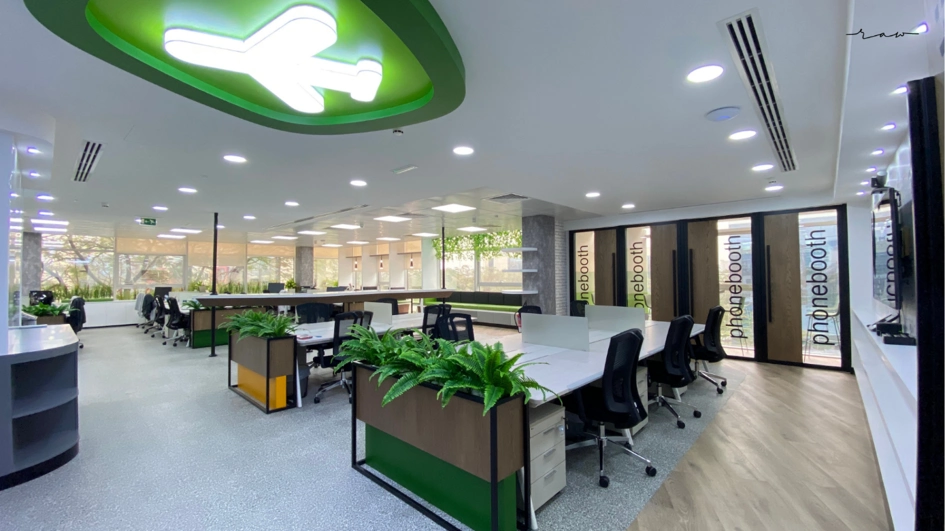
Technology has become an integral part of workplace design. Modern offices must support hybrid working, seamless communication, and operational efficiency without overwhelming the user experience.
Popular smart office features include:
Technology should remain intuitive and discreet, enhancing productivity while maintaining clean, uncluttered interiors.
The most successful innovative workspace design ideas integrate technology naturally into the workplace, allowing employees to focus on collaboration and creativity rather than operational challenges.
A well-designed workplace improves employee wellbeing, productivity, collaboration, brand perception, and talent retention while creating a better overall business environment.
It is a workplace strategy that provides different types of spaces for different work activities, allowing employees to choose the environment that best supports their tasks.
Biophilic design improves employee wellbeing by introducing natural light, greenery, organic materials, and nature-inspired environments that reduce stress and enhance focus.
Yes. Workplace design influences how employees interact, collaborate, and experience the organisation, helping reinforce company values and strengthen culture.
The future of workplace design is centred on people. Businesses that invest in innovative workspace design ideas create environments that attract top talent, encourage collaboration, strengthen brand identity, and improve long-term organisational performance.
At RAW Design, we believe exceptional workplaces balance creativity with functionality. Through intelligent office interior design, tailored creative office interior design solutions, and forward-thinking commercial interior design solutions, we design offices that not only meet today’s evolving business needs but also prepare organisations for the workplace of tomorrow.


© All rights reserved Rawdesign.
Designed and developed by Tequila.ae


